How to Get Your Startup Indexed by Google Fast
Your new site isn't showing up in search yet. Here's how to get indexed by Google fast, from sitemap to first backlinks, and what actually speeds it up.

You may have the best content in the world. But if Google can't find your pages and index them, nobody will ever see them. Google has to find you before it can index you, and it finds pages on your site by following links from pages it already crawls. A site with zero inbound links gives Google no path to walk.
To make yourself easy to find, the job splits in two: tell Google you exist, then give it a reason to keep coming back.
What indexed actually means
Before getting into the details, it helps to know what indexed actually means. I see three things get mixed up constantly, and they're not the same:
- Crawled. Googlebot fetched your page. That's it.
- Indexed. Google kept the page and it's now eligible to appear in results.
- Ranking. Where that page lands for a given search.
You can be crawled and never indexed. You can be indexed and rank on page 100, and thus never get found. Getting indexed is the first gate to conquer, because nothing else you do for SEO matters until you're through it.
To check where you stand, you can simply search a few of your own keywords in Google and see whether anything of yours comes back. The accurate answer comes from the URL Inspection tool in Google Search Console, which tells you per URL whether Google has it, when it last crawled it, and why it might have skipped it. It's free, so use it. And if you want more advanced data, like how competitors are doing on the same keywords, head over to a tool like Ahrefs.
How long does it take Google to index a new site?
It depends almost entirely on how much of a path Google has to your site:
- Brand new domain, no backlinks, no sitemap. One to four weeks, sometimes longer. Google has no reason to look for you.
- New domain with a sitemap submitted and a handful of directory backlinks. Usually a few days, often faster for your homepage.
- Established site with real authority. Hours to a day or two for new pages. Once you're around DR 25, Google checks in constantly, which is one of the things a higher Domain Rating actually buys you.
Step 1: Submit a sitemap and request indexing
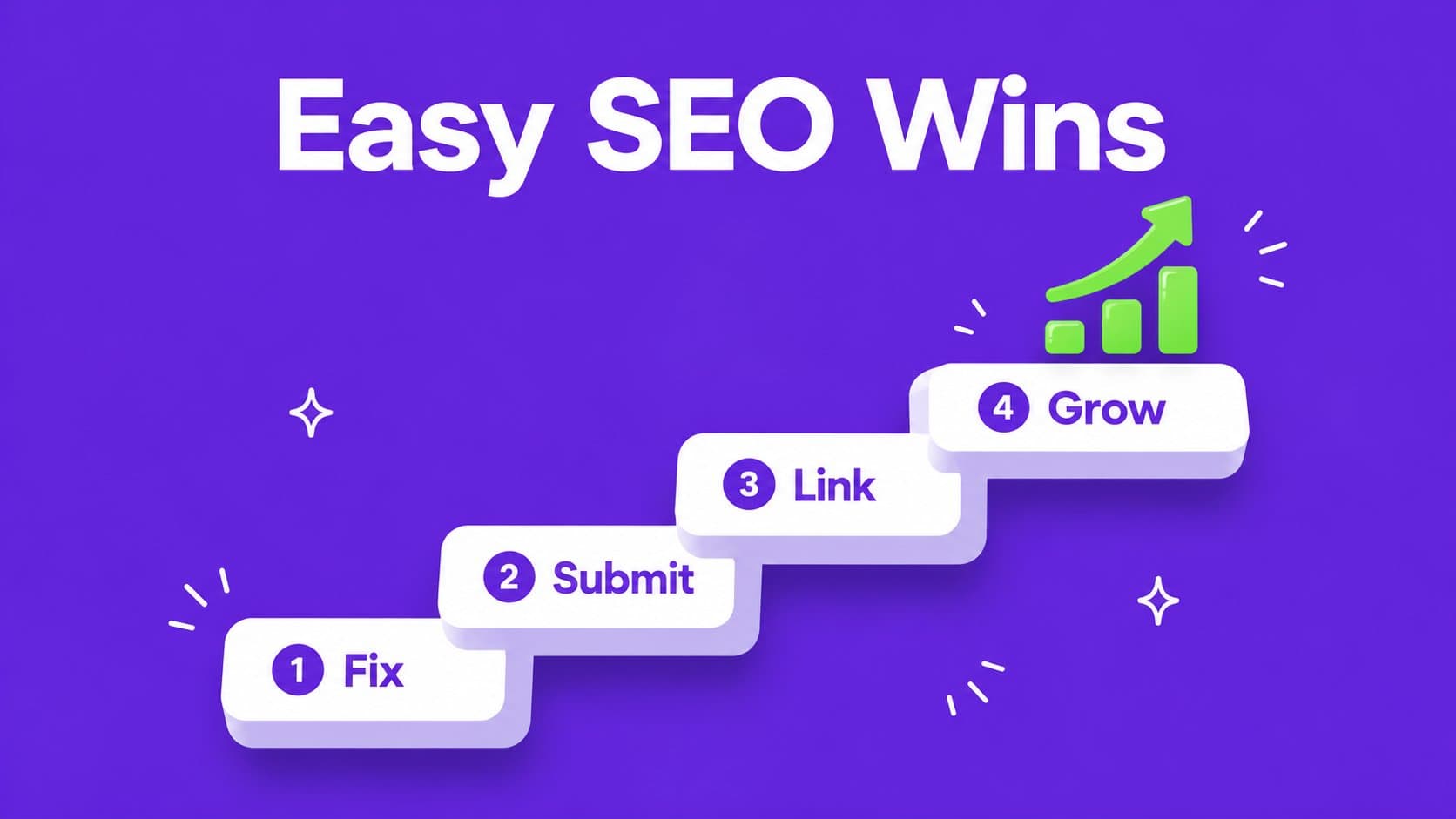
So to get started, these are the first steps you should take to tell Google you exist:
- Set up Google Search Console and verify your domain, either through DNS or by uploading the HTML file.
- Find your sitemap. This is a file that lists every page on your site you want Google to know about, so the crawler doesn't have to guess its way around. Most modern stacks actually generate one at /sitemap.xml automatically for you, so often you're already covered. Open that URL in a browser and check your real pages are listed.
- Submit that sitemap URL under Sitemaps in Search Console.
Step 2: Make sure you're not blocking yourself
Plenty of sites never get indexed for stupid or boring reasons. Check all of these before you blame Google:
- A leftover noindex tag. This is a common cause (I've run into it multiple times myself). A noindex tag tells Google not to index that page. For certain parts of your site that's exactly what you want, but most of the time you want the page to be seen. View source and search for it.
- robots.txt blocking the crawler. This one is also often overlooked. Open yourdomain.com/robots.txt and make sure you're not disallowing everything.
- A canonical tag pointing somewhere else. This one is harder to spot. A canonical tag is a line in your page's HTML that tells Google "this page is a duplicate, the real version lives at this other URL". Google then indexes that other URL and ignores yours.
- Content that only appears after JavaScript runs. Google can render JS, but it does it slower and less reliably. Your key pages should have real text in the HTML response.
- Thin or duplicate pages. Make sure your pages are unique enough. If you have twenty landing pages that differ by one word, they look like one page to Google.
Step 3: Get backlinks so Google has a reason to crawl you
One way to get Google to notice you more is getting backlinks, meaning other sites that link to you. Backlinks raise your Domain Rating, which is a proxy for how credible your site is. Improving your DR can get your site and its pages indexed in days instead of weeks.
To elaborate on that point, Google discovers new pages by following links from pages it already crawls often. A sitemap tells Google your URLs exist, but a link from a page Google visits daily tells it those URLs matter.
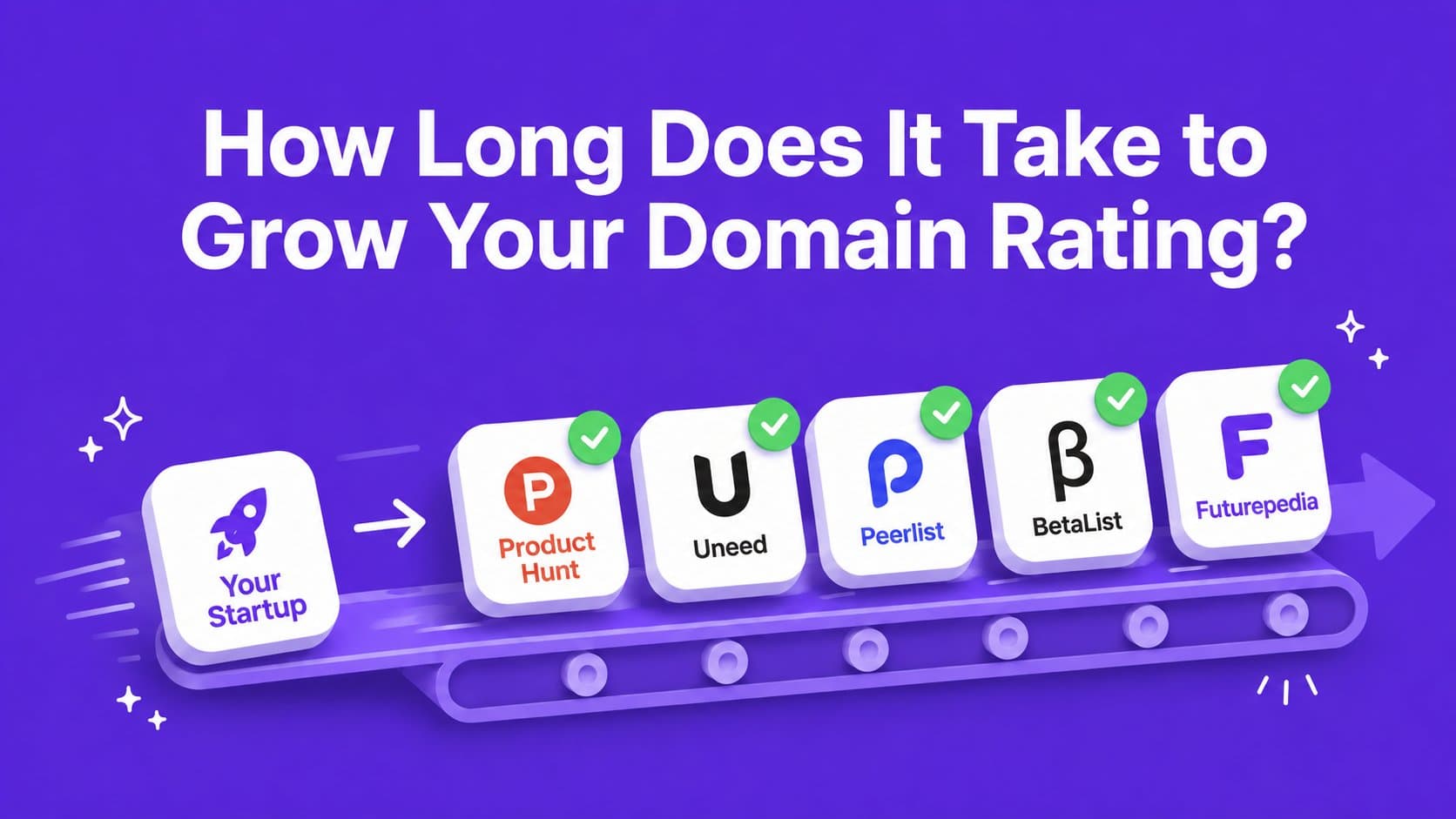
For startups, directories are actually the quickest source of these backlinks. A few solid listings are enough to change how Google treats your domain, and they give you independent pages describing what you do, which helps you rank once you're indexed. You can start with 10 easy and free dofollow backlink directories, or head over to the directory roadmap for a full overview of curated and vetted directories.
Step 4: Give Google more to index
A site with four pages gets crawled less often than a site with thirty. Every page you add is another entry point and another reason for Googlebot to come back.
Two things to do here. Link to every important page from your homepage or footer, because orphan pages that nothing links to are the ones Google quietly drops. And start publishing. A blog, use case pages, a changelog, anything with real content on it. This compounds with your backlink work, since authority and organic traffic move together.
Why Crawled, currently not indexed happens
Another thing to look out for are messages in your Search Console that say "crawled, currently not indexed". What this means is that Google fetched the page, looked at it, and decided not to keep it.
Luckily you can fix it. Here are three things you can do, in order of impact:
- Make the page worth keeping. Unique content, a real answer, not a thin page that repeats what's already on your homepage.
- Link to it internally. A page with no internal links looks unimportant to Google, because you're telling it that yourself.
- Build authority on the domain. The higher your Domain Rating, the more benefit of the doubt each new page gets.
You may also see "Discovered, currently not indexed". That one means Google knows the URL exists but hasn't fetched it yet, usually because it doesn't think your site is worth the crawl time. Same fix, more links.
Liked this article?