Dofollow vs Nofollow Links: What's the Difference?
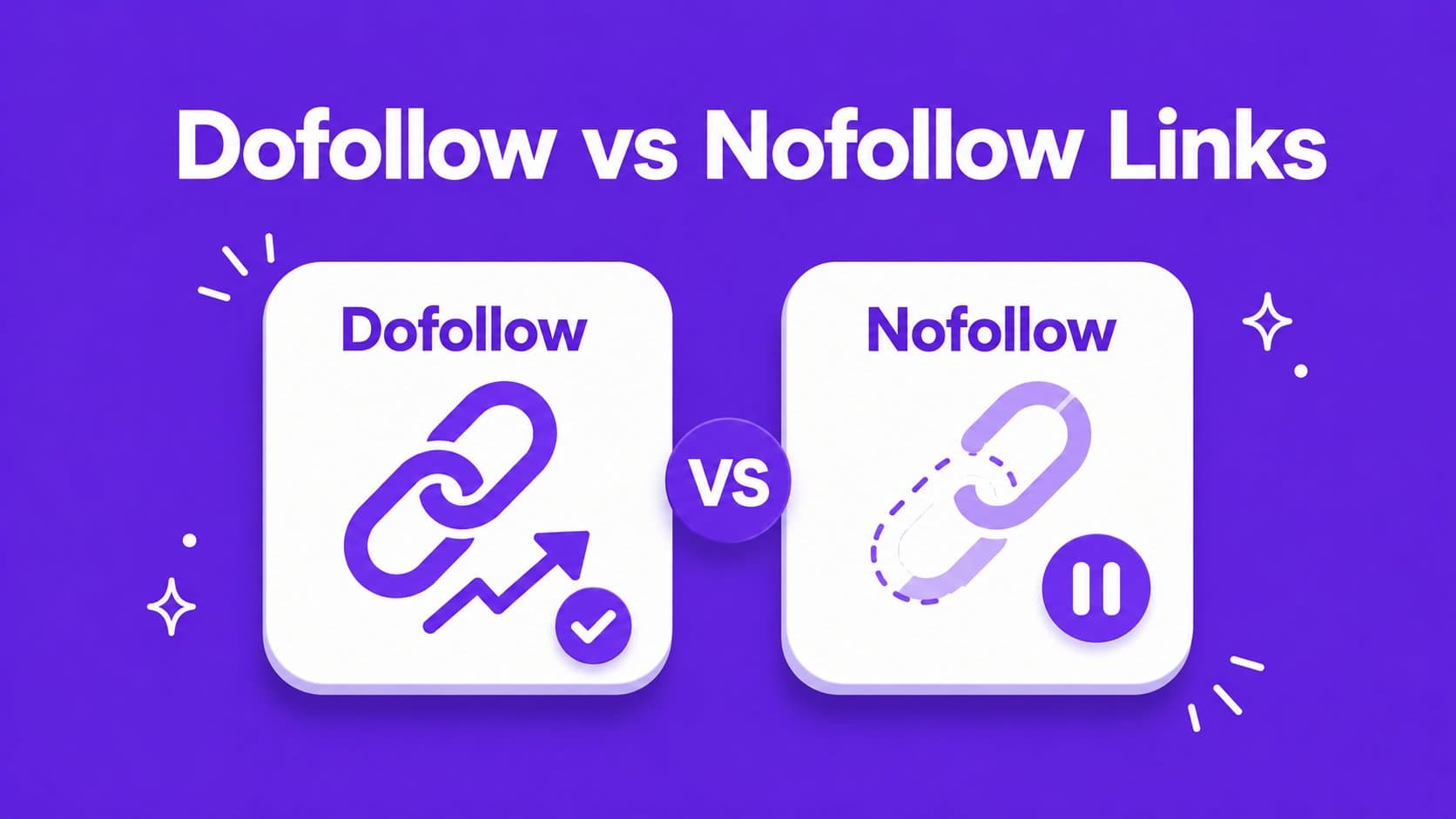
Dofollow links pass authority and lift your ranking, nofollow links don't. Here's more about the difference, how to check a link, and which ones are worth your time.

The whole difference comes down to a single HTML attribute. A dofollow link passes authority to your site and helps you rank, a nofollow link doesn't. When you're building backlinks for SEO, dofollow is the one that most people care about. Since 2019 Google treats nofollow as a hint rather than a strict rule, but in practice it still passes little to no ranking value.
Here's the side-by-side version before we get into the detail.
What is a dofollow link?
A dofollow link is just a normal link. There's no special attribute on it, which is why it's the default every time someone links to you.
In HTML it's nothing more than a standard anchor tag: `Your product`. No `rel` attribute, nothing extra.
What makes it valuable is that it tells Google "follow this link and pass authority through it". When a high-authority site, say a Domain Rating 85 directory, links to you with a dofollow link, Google treats it as a vote of confidence. That authority (often called link equity) flows to your site, your own Domain Rating goes up, and you start ranking higher for the keywords you target. If Domain Rating is new to you, here's the full breakdown.
So all in all, this is the link you want when you're building backlinks on purpose. Every dofollow link from a credible domain is a small, permanent vote for your site's credibility.
What is a nofollow link?
A nofollow link carries an extra attribute in the HTML: `rel="nofollow"`. The full tag looks like `Your product`. That attribute tells Google "you can follow this link, but don't pass authority through it". Google sees the link, but the SEO benefit is heavily discounted, close to zero for ranking purposes.
Nofollow is the default in a lot of places you'd want links from. Social platforms, blog comments, forum posts, and most user-generated content default to nofollow so people can't game rankings by spamming links. Google later split nofollow into two more specific attributes, `rel="sponsored"` for paid or affiliate links and `rel="ugc"` for user-generated content, but for your purposes they all behave the same way: no real ranking authority passes through.
Do nofollow links have any value?
Yes, so don't write them off entirely. A nofollow link still sends real people to your site, and referral traffic is referral traffic no matter what the attribute says. A natural backlink profile also has a healthy mix of both, so a wall of nothing but dofollow links can actually look suspicious to Google.
The point is just to be clear about what each one does. Chase nofollow links for traffic, brand visibility, and social proof. Chase dofollow links when your goal is ranking. Product Hunt is the classic example: it's nofollow, so it won't move your DR by a single point, but it's still worth launching there for the exposure.
What is a good dofollow to nofollow ratio?
There's no official ratio from Google, and you don't need to engineer one. A natural backlink profile usually lands somewhere between half and three quarters dofollow, with the nofollow share accumulating on its own from social platforms, forums, and comments.
Practically that means: build dofollow links on purpose (directories, partnerships, guest posts), let nofollow links happen by themselves, and the mix takes care of itself. The only real red flag is a profile that's 100% dofollow, which tells Google every link was placed rather than earned.
How to check if a link is dofollow or nofollow
Plenty of directories quietly hand out nofollow links, and you won't always know unless you look. There are several quick ways to check.
- Read what the site says. Many directories state upfront whether they give dofollow links, often right on the submission page or in their pricing.
- Inspect the HTML. Right-click the link to your site, choose "Inspect", and read the `` tag. If you see `rel="nofollow"` (or `sponsored` or `ugc`), it's not passing authority. If there's no `rel` attribute, it's dofollow.
- Use a browser extension. Tools like a nofollow highlighter will outline every nofollow link on a page automatically, which is faster when you're checking a lot of listings.
You can also use a tool we made to quickly check the backlink. Paste a directory listing into our backlink checker and it tells you whether the link is still live and whether it's dofollow or nofollow.
How to get dofollow backlinks?
Launching on directories is one of the fastest ways to earn them. That's why at LaunchPanda we built a hand-picked roadmap of directories that actually give free dofollow backlinks, then made the launch process almost clickless with our browser extension. We got LaunchPanda's own Domain Rating to 48 in just three months this way. Read more about how it works.
Liked this article?