How to Increase Domain Rating Fast (5 Proven Steps)
How to increase Domain Rating fast: the 5 step playbook that took LaunchPanda from DR 0 to 28 in 30 days, using free dofollow directory backlinks.

Launching on directories that hand out dofollow backlinks is the fastest way to increase your Domain Rating. It is how we took LaunchPanda from DR 0 to DR 28 in 30 days, and it costs nothing but an afternoon of forms.
Below is the exact playbook, then the context on what DR is and what counts as a good score.
Most sites never get there. In an Ahrefs study of over a billion pages, 66.31% had zero backlinks and more than 90% had three or fewer. That is the bar you are clearing, and it is lower than it looks.
How to increase Domain Rating fast
As a builder there are different ways to increase your Domain Rating. One of the fastest ways is to launch on so-called directories. These are platforms where builders can launch their products for others to see. Many of them also give dofollow backlinks, meaning they tell Google you are a credible website.
Here's the playbook to increasing your Domain Rating fast.
1. Submit to high-DR launch directories
As a founder, the easiest way to start increasing your DR is to launch your tool on directories. Here are 50 free dofollow directories, ranked by Domain Rating, with approval times and submit links. Start at the top of that table and work down.
LaunchPanda also gives you a ready-made roadmap that makes launching easy. Just follow the curated list of directories and watch your Domain Rating grow. For the full step-by-step, read how to launch your startup on 250+ directories.
Some easy directories to launch on
2. Skip nofollow links, they don't count toward DR
Product Hunt is probably the most popular directory. However, it is nofollow. Still worth launching there for traffic and social proof, but it won't move your DR by a single point.
Always check whether a directory's link is dofollow or nofollow before spending an hour on their form. LaunchPanda labels every directory with this info upfront.
3. Place required badges (it's a fair trade)
Some directories give you a dofollow backlink in exchange for putting their badge on your site. A small image in your footer for a permanent SEO boost is one of the best deals in indie marketing. Don't skip these. LaunchPanda does the same, list your product and place the badge to activate your dofollow link. Here's how to install directory badges the right way.
4. Get listed in niche communities
After the obvious directories, look at communities on platforms like Reddit. Posts that rank high there can count toward your SEO too. Especially with the rise of AI, Google is leaning more and more on platforms like Reddit where real humans are active. LaunchPanda's subreddit roadmap points you to the right communities to post in. Also try to get mentioned by websites organically. When you publish blogs or content that is quotable, people will link to it on their own.
5. Publish linkable content
Once you've managed to get a DR of about 20+, it's smart to think about the next phase. A good strategy is to start focusing on content that earns links naturally. Think of useful guides, original research, insights and free tools. But we would advise not to skip phase 1, as it can give a great headstart.
A realistic timeline
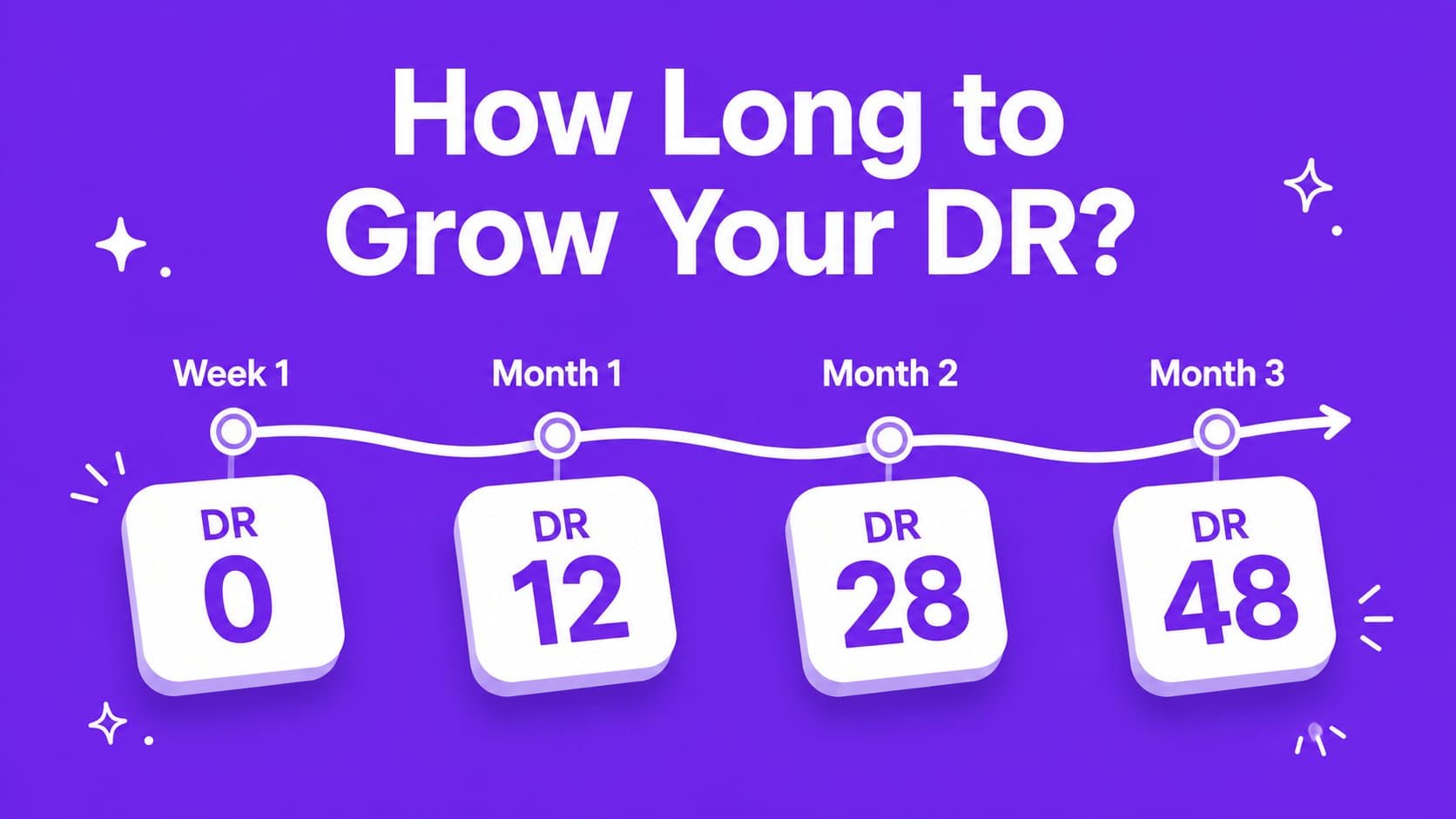
You should know that DR doesn't grow overnight. Generally, what I've seen on the platform is that startups follow a trajectory like the one below when they stay consistent:
The Domain Rating can move a lot faster when you put real effort in. This is the exact method we used to take LaunchPanda to DR 28 in just 30 days.
What is Domain Rating?
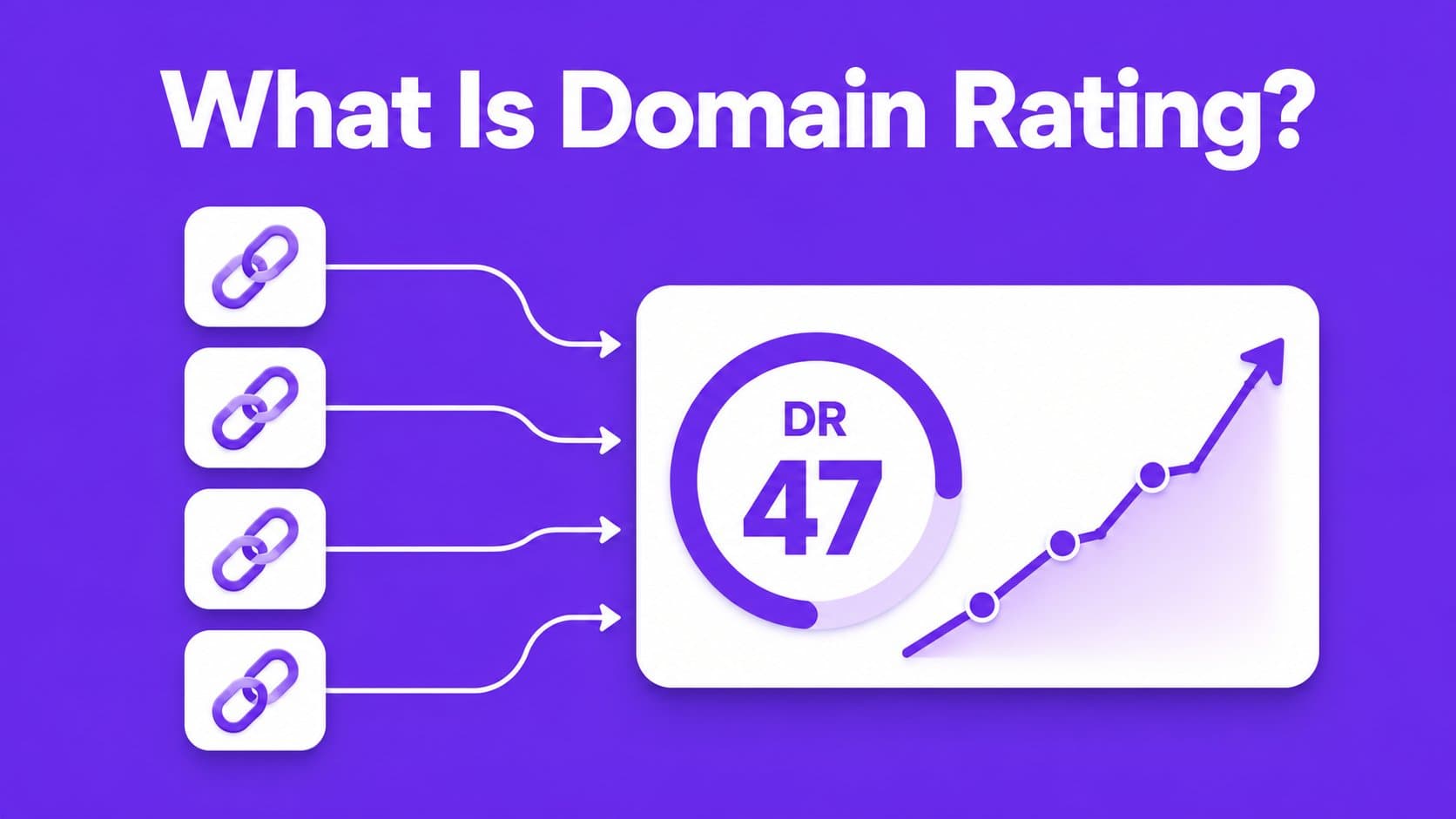
First of all, a quick refresher for those who don't know. Domain Rating (DR) is a score from 0 to 100, invented by one of the most popular SEO tools, Ahrefs, that measures how strong a website's backlink profile is. The more high-quality sites linking to you, the higher your DR.
By the way, the number is logarithmic. This means moving from DR 10 to DR 20 is way easier than moving from DR 70 to DR 80. The first 30 points are a lot easier to get. Getting the final 30 is a whole different game of earning links from giants like Wikipedia, the New York Times, or Google itself.
A few reference points:
How is DR calculated?
The exact formula is Ahrefs' secret sauce, but the rough inputs are:
- Number of unique referring domains (not total backlinks, 100 links from one site count as 1 domain)
- DR of the sites linking to you (one link from a DR 80 site beats 50 links from DR 5 sites)
- Whether the link is dofollow or nofollow (only dofollow passes link equity)
That's it. Content quality, traffic, and on-page SEO don't directly affect DR. It's a pure backlink metric.
DR vs DA (and the other scores you'll see)
You'll also hear about Domain Authority (DA), plus a couple more. They're the same idea from different companies, each with its own math:
- DR (Ahrefs) is the one most indie builders quote, because Ahrefs has a free checker that anyone can use without an account.
- DA (Moz) was the default score before Ahrefs took over the conversation.
- Authority Score (Semrush) blends in estimated traffic and spam signals on top of links.
- Trust Flow and Citation Flow (Majestic) split the score in two, one for link volume, one for link quality.
All of them are estimates. Google doesn't actually use any of them. But they're a decent proxy for how seriously Google will take a site.
Why does Domain Rating matter?
Two reasons.
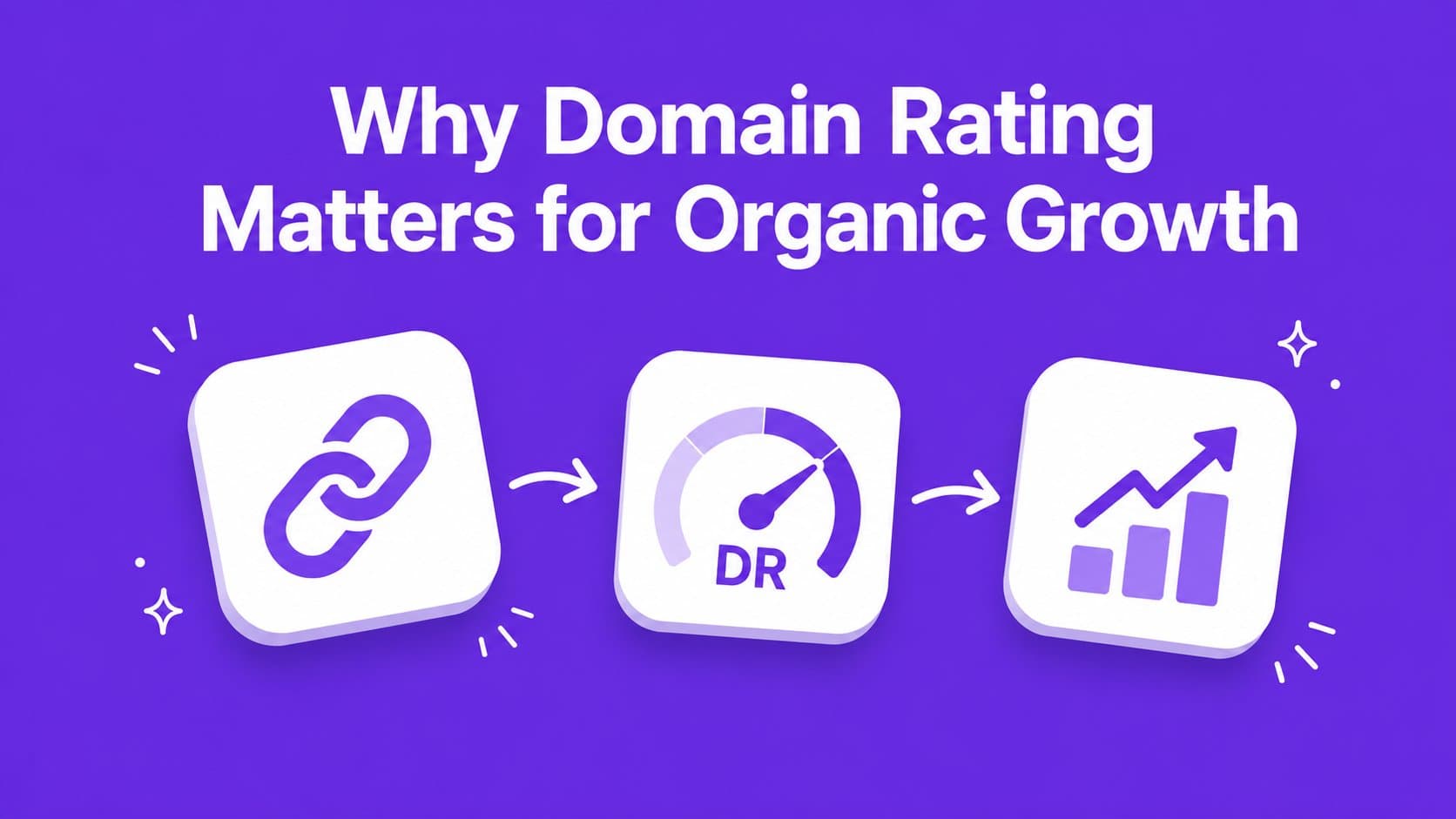
First, higher DR means better Google rankings. Pages on high-DR sites tend to outrank pages on low-DR sites for the same keyword, all else equal.
Second, higher DR means more powerful outbound links. When *you* link to someone, your DR makes their backlink more valuable too. That's why getting linked from a DR 80 site is such a big deal.
If you're trying to rank for any keyword with real search volume, you need at least DR 20 to 30 before Google starts taking your pages seriously.
Don't want to launch yourself?
Submitting to dozens of directories by hand takes time. Due to high demand, we built an automated launching service that submits your product to anywhere from 40 to 100+ directories, depending on the plan you pick. Your backlinks start compounding while you keep building.
Liked this article?