← Back to Blog
2026-05-08·6 min read·

Why Domain Rating Matters for Organic Growth (And Why Early-Stage Builders Have the Edge)
Domain Rating is the quiet growth lever most indie builders ignore. Here's why it matters, why the first 30 points are the easiest, and how to start compounding now.

Most early-stage builders pour their energy into the product. Features, polish, performance. All of that matters. But there's one growth lever almost everyone underinvests in during the first 90 days, and it compounds harder than anything else you can do this quarter:

Distribution. Specifically, search-driven distribution.

Organic traffic from Google (and increasingly from AI-driven discovery in tools like ChatGPT and Perplexity) remains one of the most scalable, lowest-cost channels in existence. The flywheel that powers it has one core metric at its center: Domain Rating.

What Domain Rating actually buys you

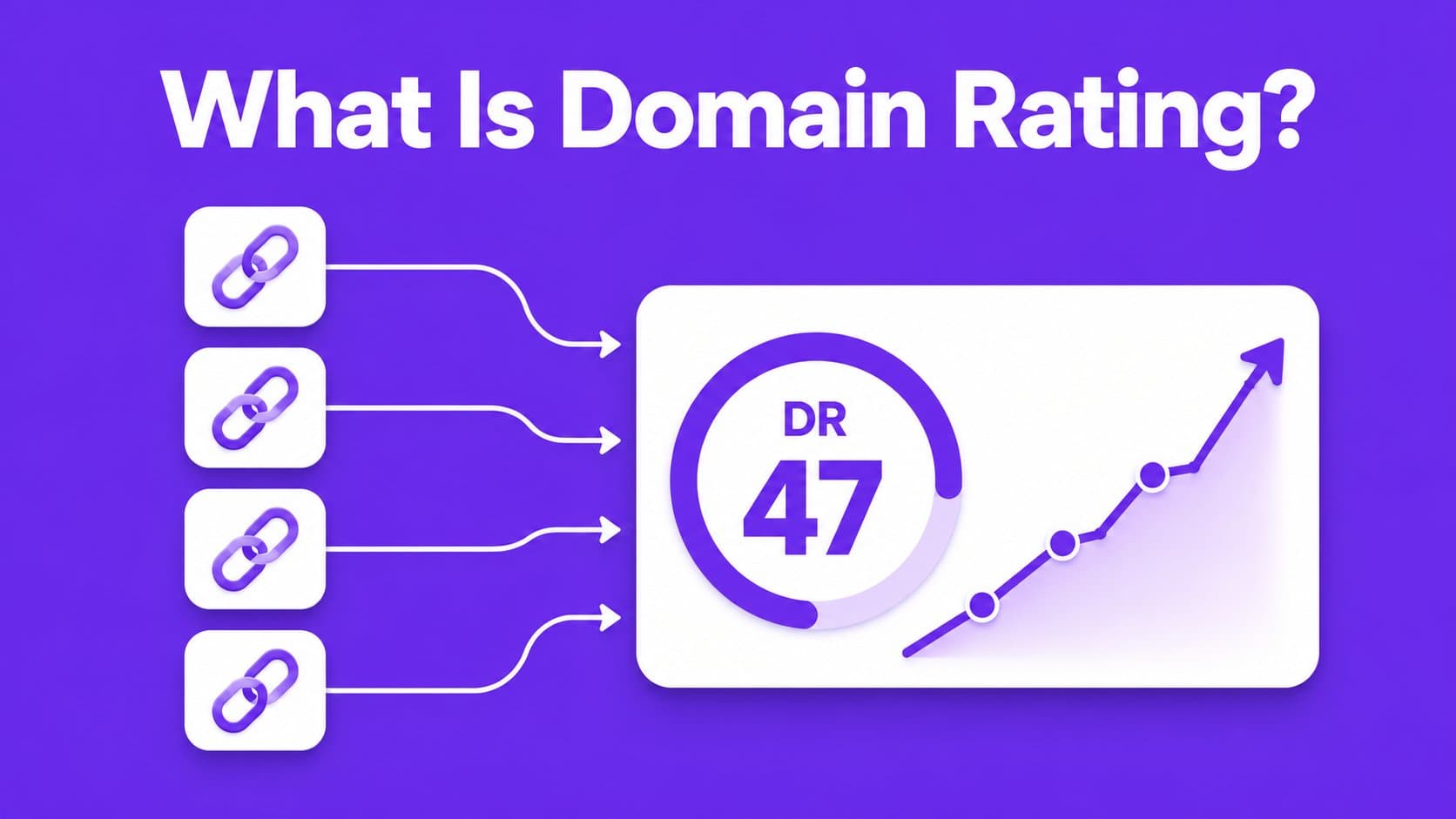
Domain Rating, popularized by Ahrefs, scores a website's backlink profile from 0 to 100. The more high-quality sites that link to you, the higher your DR.

Google does not use Ahrefs' DR directly. But DR strongly correlates with everything Google *does* care about: trust, authority, link diversity. In practice, a higher DR means three concrete things for your business:

  • Higher search rankings. Pages on high-DR sites consistently outrank pages on low-DR sites for the same keyword. Ahrefs studied 218,713 domains and the relationship is brutal:
Domain Rating vs Keyword Rankings — Ahrefs study of 218,713 domains
Source: Ahrefs — average keyword rankings per DR bucket. Note the log scale on the y-axis.
  • Stronger outbound links. When *you* link out, your DR makes that backlink more valuable. It's why getting linked from a DR 80 site is such a big deal.
  • Better AI discoverability. LLMs increasingly rank sources by domain authority signals. Being a known, well-linked site means you show up in AI answers, not just Google.

Look at the chart above carefully. Below DR 50, the average site ranks for a few hundred keywords at most. Above DR 50, the curve goes vertical, with sites at DR 90+ ranking for hundreds of thousands of keywords. The takeaway isn't "DR doesn't matter at the low end." It's the opposite: you have to get past the foundation phase to unlock anything. There's no skipping the climb.

The data: backlinks drive organic traffic

The link between referring domains and organic search traffic is one of the most studied correlations in SEO. Across ~920 million pages in Ahrefs' index, the pattern holds:

Referring Domains vs Search Traffic — Ahrefs study of ~920M web pages
Source: Ahrefs — more referring domains correlates almost linearly with more organic search traffic.
As the number of referring domains increases, organic search traffic increases alongside it.

The logic is intuitive once you see it:

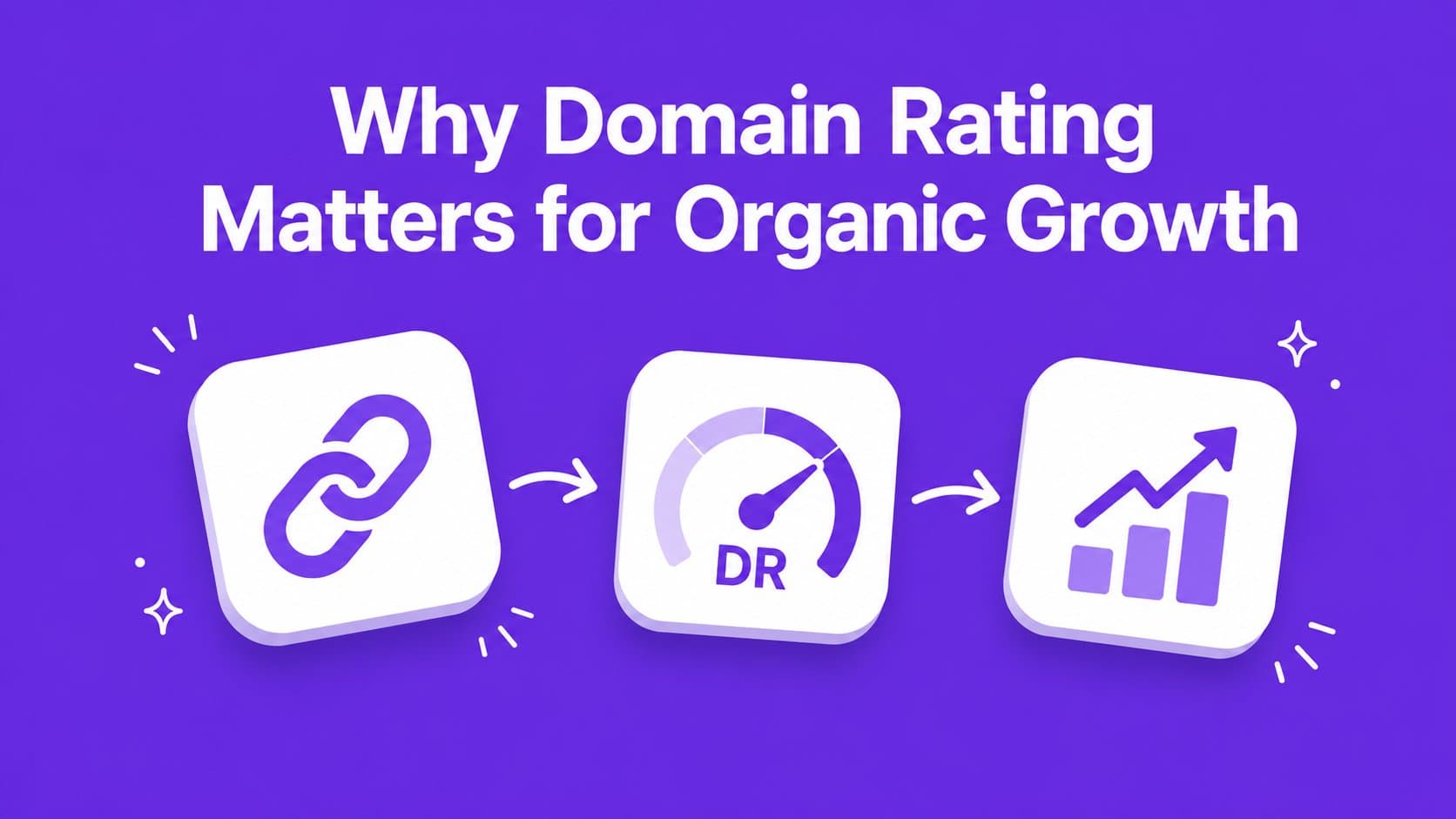
  • More backlinks means stronger authority
  • Stronger authority means higher rankings
  • Higher rankings means more clicks
  • More clicks means more users, feedback, signal, revenue

This isn't a theoretical relationship. It's an observed one. And the most important insight from the data isn't just *that* it correlates, it's *where* on the curve the biggest wins happen.

The early-stage advantage nobody talks about

Here's the insight most builders miss:

The first 30 DR points are the cheapest, and the only ones you can buy with hours instead of years.

Look at the rankings chart again. The exponential payoff lives above DR 50. Getting there is non-negotiable if you want organic traffic. The question is *how expensive* the climb is for you.

The cost of DR points by phase:

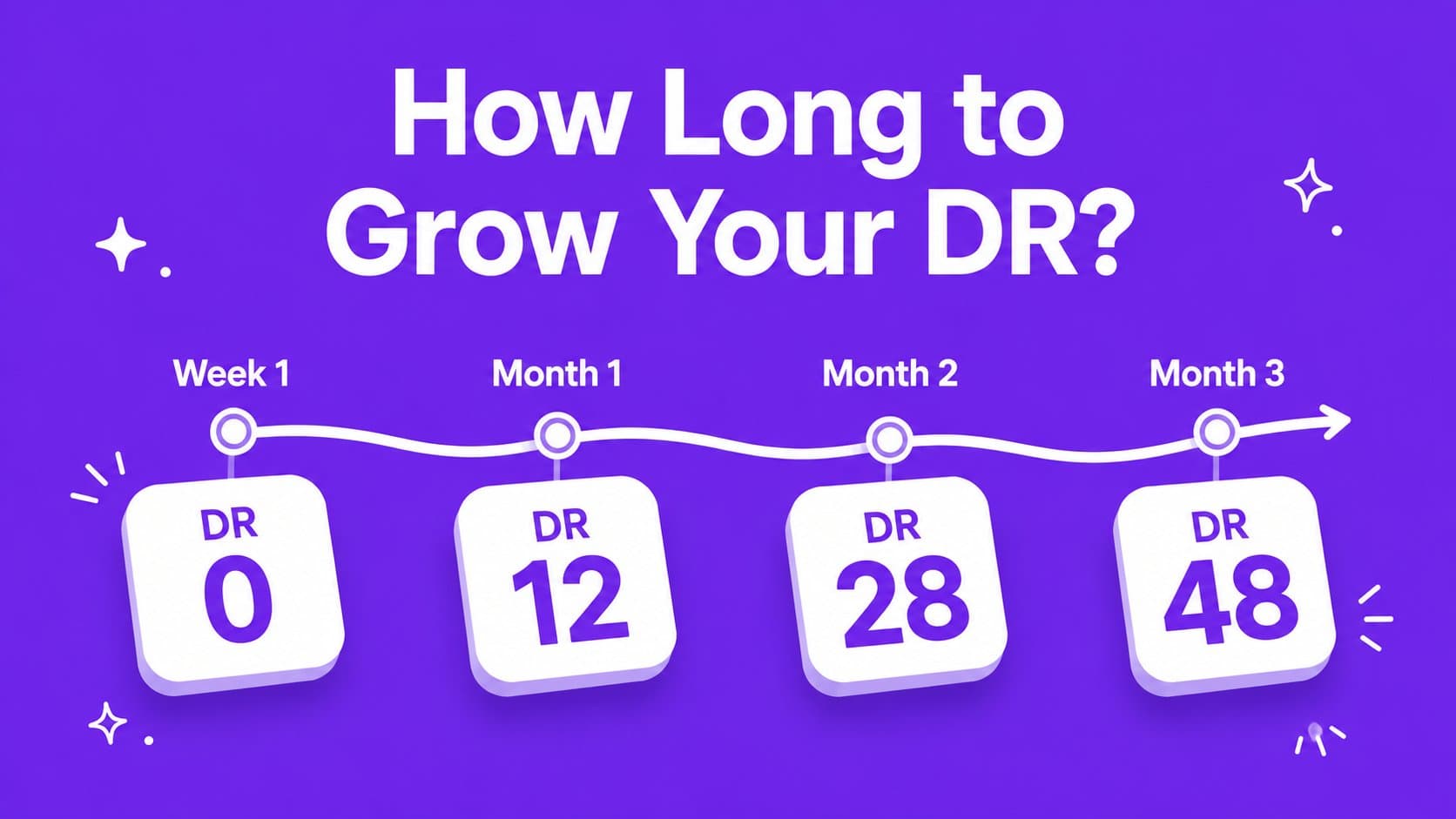
  • DR 0 → 30: weeks of work. Submit to high-DR directories, place required badges, hit niche curated lists. Almost free, almost no skill required.
  • DR 30 → 50: months. You're now writing content, doing guest posts, earning a few editorial mentions. Some skill required.
  • DR 50 → 70: years. PR, original research, real launches that journalists notice. A team and a budget.
  • DR 70 → 90: that's a brand. Stripe, Shopify, big SaaS-with-rounds territory.

What this means in practice:

  • If you launched in the last 6 months, the first 30 points are the cheapest growth you will ever buy. They cost the same in 2026 as they will in 2030, but you only get the compounding head start if you start now.
  • Every month you wait is a month the rankings curve sits flat for you while a competitor's starts climbing.
  • The painful part is the directory phase comes first. You can't skip it. You can only do it now or do it later.

The math is brutal in your favor early because directories are everywhere, fast, and free. Almost no other growth channel offers a fixed-time, fixed-effort path from "invisible" to "Google takes you seriously."

Why most builders miss this opportunity

Three patterns I see over and over:

  1. "SEO is a long-term game, I'll do it later." True, but the actions that pay off later have to happen now. Backlinks compound for the same reason interest does.
  2. "I'll focus on product first, distribution after PMF." Reasonable on paper, except the feedback loop that gets you to PMF includes traffic. No traffic, no validation, no PMF.
  3. "Backlinks are tedious." Submitting your product to 30+ directories by hand is genuinely tedious. So most builders do five and stop. The opportunity stays on the table.

The result: products launch into a vacuum. Six months later they're still at DR 3, wondering why nobody finds them.

The compounding flywheel

Backlinks compound the same way savings do. The earlier you start, the more cycles the loop runs:

Backlinks → Rankings → Traffic → Users → More backlinks (from people writing about you)

Skip the first step and the loop never starts. Start it on day 30 instead of day 300, and you're 270 days ahead of where most competitors will ever get.

Practical strategy for early-stage builders

The good news: you don't need to be a marketing expert. You need a structured submission pipeline. The basic order of operations is:

  1. Submit to high-DR launch directories first. One backlink from a DR 80 directory is worth twenty from random DR 10 ones.
  2. Prioritize dofollow over nofollow. Only dofollow links pass authority. Product Hunt is nofollow, by the way. Good for traffic, useless for DR.
  3. Place required badges. A small image in your footer for a permanent dofollow backlink is one of the best deals in indie marketing.
  4. Hit niche communities and curated lists. Awesome-* lists on GitHub, subreddit wikis, "tools we love" pages in newsletters. Each one is a fresh referring domain.
  5. Track which directories actually have a dofollow backlink. A surprising number quietly nofollow their links and you'll never know unless you check.

The goal in the first 60 days isn't perfection, it's momentum.

How LaunchPanda fits in

We built LaunchPanda to remove the boring part. Save your product info once, get a personalized roadmap of the right directories for your stage, check them off as you go.

If you'd rather skip the manual work entirely, our [Done-For-You Launch](/auto) does the submissions for you across 30 to 100+ directories, with badge install support included. Most kits go from DR 0 to DR 6+ in the first 30 days, with the curve continuing well past that as the backlinks settle and Google reindexes.

You can DIY it, or you can hand it off and start the compounding flywheel today. Either way, the math is the same. The earlier you start, the more leverage you get.

DR is a long game. But the first 30 points are the cheapest, fastest, and most underrated growth move you'll make all year.

Ready to launch?

Save your product info once, get matched to the right directories, and launch everywhere in 30 minutes.

Get Started Free
Domain RatingSEOBacklinksGrowth