Easy SEO Wins: 5 Fixes You Can Ship Today
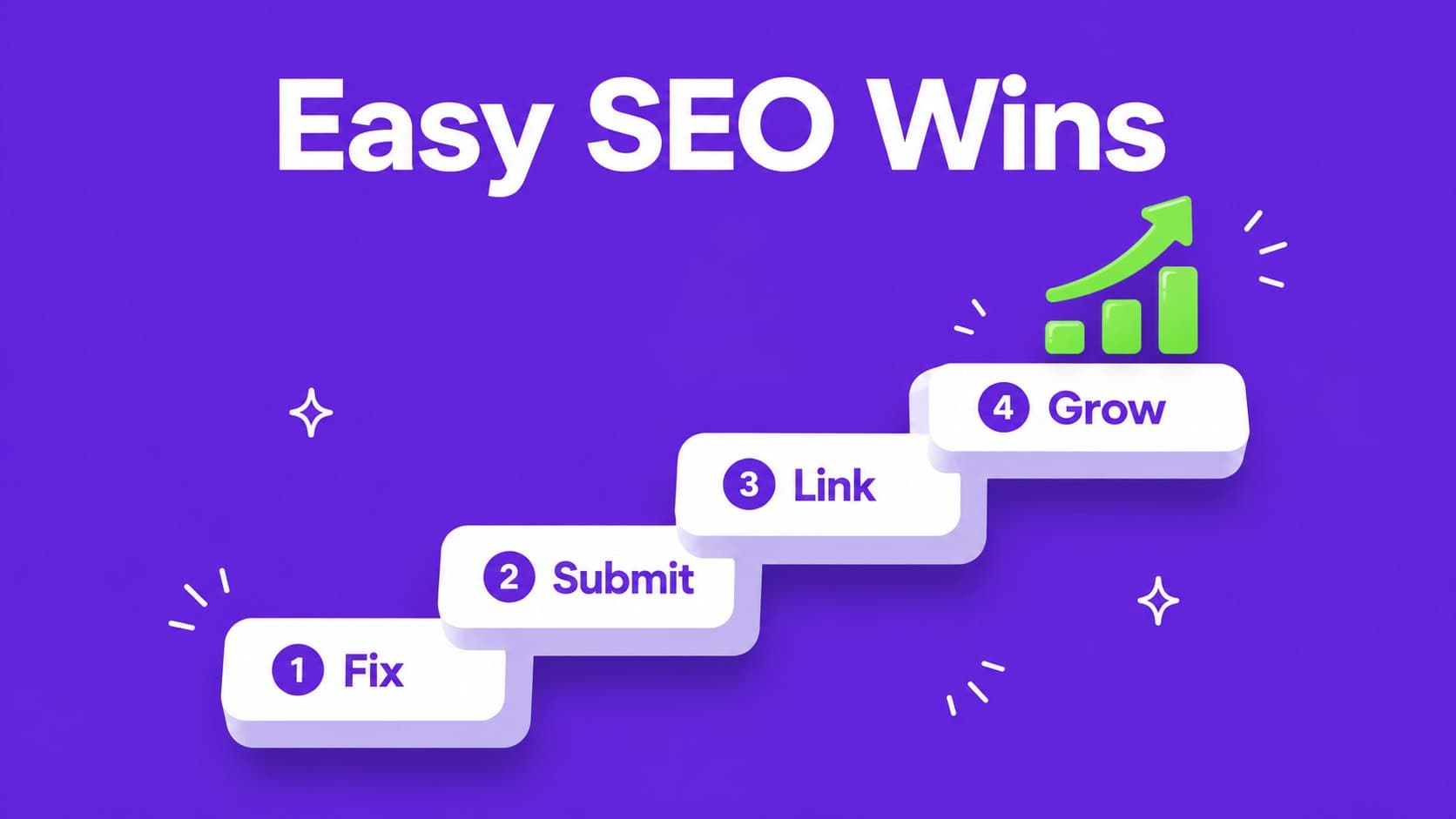
SEO can be overwhelming as a founder, especially at the start. Here are a few quick wins you can ship in an afternoon that make a real impact.

SEO is a long-term game, and it takes real work. But not every win is slow or technical. Beyond publishing valuable content, you mainly need three things to line up: Google has to find your pages, each page has to be clear and worth clicking, and other sites have to link back to you. Several of those fixes take just an afternoon. Here's what to do.
1. Give every page a clean, readable slug
Your slug is the part of the URL after your domain. The slug of this post is clean, `/blog/easy-seo-wins`. If you aren't careful though, your site fills up with strange URLs like `/blog?p=1837` or `/blog/Easy_SEO_Wins_FINAL_v2`. Those aren't just ugly, they're unclear, for visitors and especially for Google.
Google reads the slug as a hint about what the page is about, so a clean one helps search engines understand and rank it. A readable slug also earns more clicks, because people can see where the link goes before they tap it.
There are generally three rules I take into account with slugs:
- Lowercase, words separated by hyphens, no spaces or underscores.
- Include the keyword you want to rank for, and nothing else.
- Try to avoid changing your slug. Set it once and leave it. A changed slug can break links, both on your own site and from other sites pointing to you.
If your pages already have messy slugs, clean them up going forward and 301 the old URLs to the new ones so you keep the traffic you already earned.
2. Write a real title tag and meta description
These are the two lines Google shows in the search result, your headline and the sentence under it. Most sites leave them on autopilot, but that quietly costs you clicks. You end up with a vague headline like "Home" and a cut-off scrap of body text, so nothing tells the searcher why your result is the one worth tapping.
Write them by hand for every page that matters:
- Title tag: put the keyword near the front, keep it under about 60 characters so it doesn't get cut off.
- Meta description: one sentence that answers the search, under 160 characters. It doesn't rank you directly, but a good one lifts your click-through rate, and clicks matter.
Think of these as the ad copy for a listing you aren't paying for.
3. Add an OG image so your link isn't naked
The second someone shares your link on X, LinkedIn, or Slack, the platform looks for an Open Graph image. No image means a bare text link that gets scrolled past. A clean 1200×630 image means a card that stops the scroll and earns the click.
Here is LaunchPanda's own OG image, the card people see the moment our link gets shared:
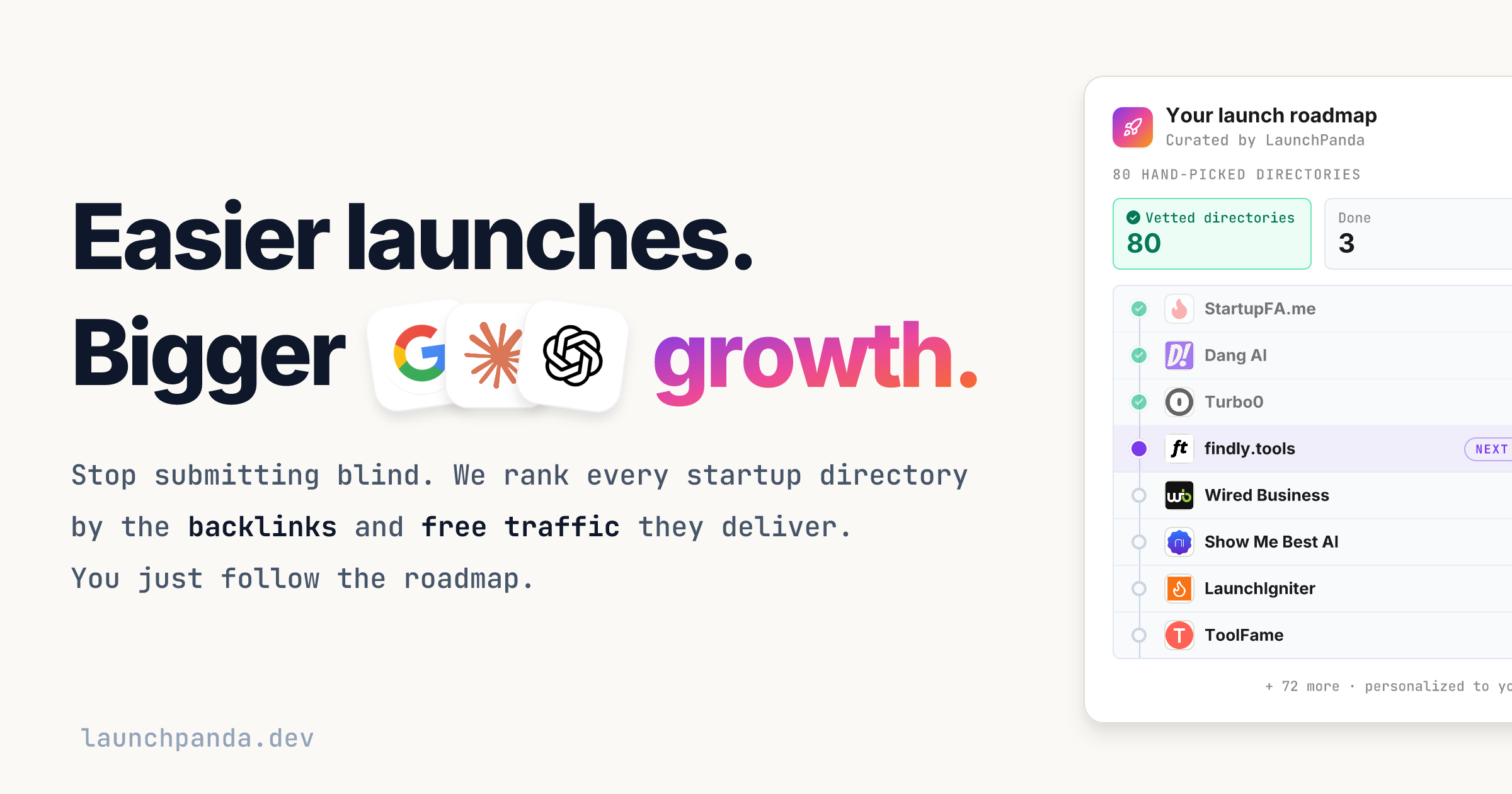
Then some technicalities. Add two tags to your page's `
`: an `og:image` pointing at an absolute image URL, and `twitter:card` set to `summary_large_image` so X shows the big version instead of a small thumbnail.Not sure how yours looks right now? Paste your URL into our social preview tester and see the exact card X, Facebook, LinkedIn, and Slack will render, plus anything that's missing.
4. Submit a sitemap and ask Google to index you
A page that isn't indexed can't rank, and Google won't always find your new pages on its own. Two steps fix this:
- Make sure your site has a `sitemap.xml` that lists your pages. Most frameworks generate one for you.
- Add your site to Google Search Console, submit the sitemap, and use the URL Inspection tool to request indexing on your key pages.
Do the same in Bing Webmaster Tools while you're there, it takes five minutes and Bing feeds other engines. Also it's a good habit to keep coming back to Search Console, as it is also where you'll catch the "Crawled, currently not indexed" warnings that quietly keep good pages out of results.
5. Earn your first real backlinks
Everything above helps Google understand your page. Backlinks are what convince Google the page is worth ranking in the first place. For a new site, the fastest honest way to get them is launching on startup directories, where each quality listing is a dofollow backlink plus a trickle of traffic.
You don't need hundreds on day one. Start with a focused first 10 backlinks and build from there. Ready to scale past those? Follow the full directory launch playbook. If you'd rather not fill in the same form fifty times, our auto launch submits your startup to high-DR directories for you, so you collect the links while your site stays exactly as it is.
Once a directory lists you, check the link actually stuck. Our backlink checker tells you whether a directory is still linking back, and whether that link is dofollow.
Liked this article?