You Hit DR 25. Now What? SEO Moves That Compound Next
What to do after you reach a high Domain Rating. The next-stage SEO moves that compound after backlinks: topical clusters, content velocity, internal linking.

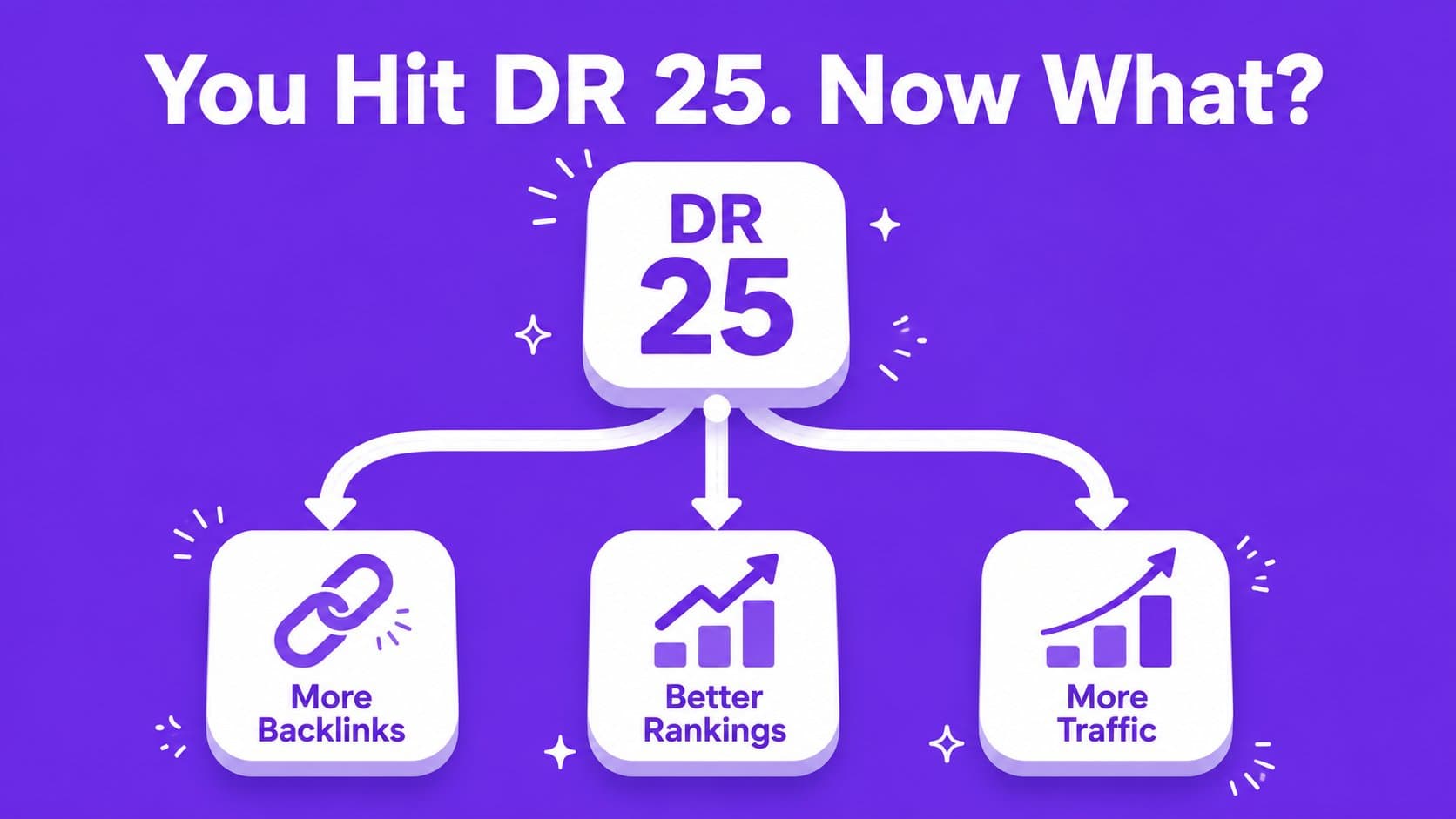
Hitting DR 25 means Google takes your domain seriously. It does not mean Google ranks your pages automatically. The next phase of SEO is about turning that earned trust into actual rankings, and the levers are completely different from the ones that got you here.
The first 25 DR points were about being seen, the next phase is about being ranked
To get to DR 25, you submitted to directories, earned dofollow links, and built a respectable backlink profile. That work is mostly done. Adding the next 5 DR points takes 3x more effort than the first 25.
The good news: you don't need to. At DR 25+, the bottleneck shifts from "does Google trust my domain" to "does Google understand what each of my pages is about, and which one to rank for what keyword."
This is where four moves start compounding faster than chasing more backlinks.
1. Topical clusters: prove you own a subject
Pick one topic your product solves. Write 5 to 10 pages that cover it from every angle. Link them to each other.
A topical cluster looks like:
- Pillar page (the broad topic): "Domain Rating for indie builders"
- Sub-pages (specific questions): "What is DR?", "How to grow DR?", "DR vs DA?", "Good DR benchmarks?", "DR percentiles?"
- Cross-links between all of them
Google reads cluster structure as "this site is the authority on this topic" and starts ranking the whole cluster, not just one page.
2. Content velocity beats content perfection
At DR 25+, Google will index your new content within days, sometimes hours. That changes the optimal cadence.
A few rules:
- One decent post per week beats one perfect post per month
- 600 to 1000 words is fine. Don't pad to hit 3000.
- Cover the long tail. Rank for "what is a good DR for SaaS" before chasing "domain rating"
- Refresh old posts when their data goes stale, Google reads the dateModified field as a freshness signal
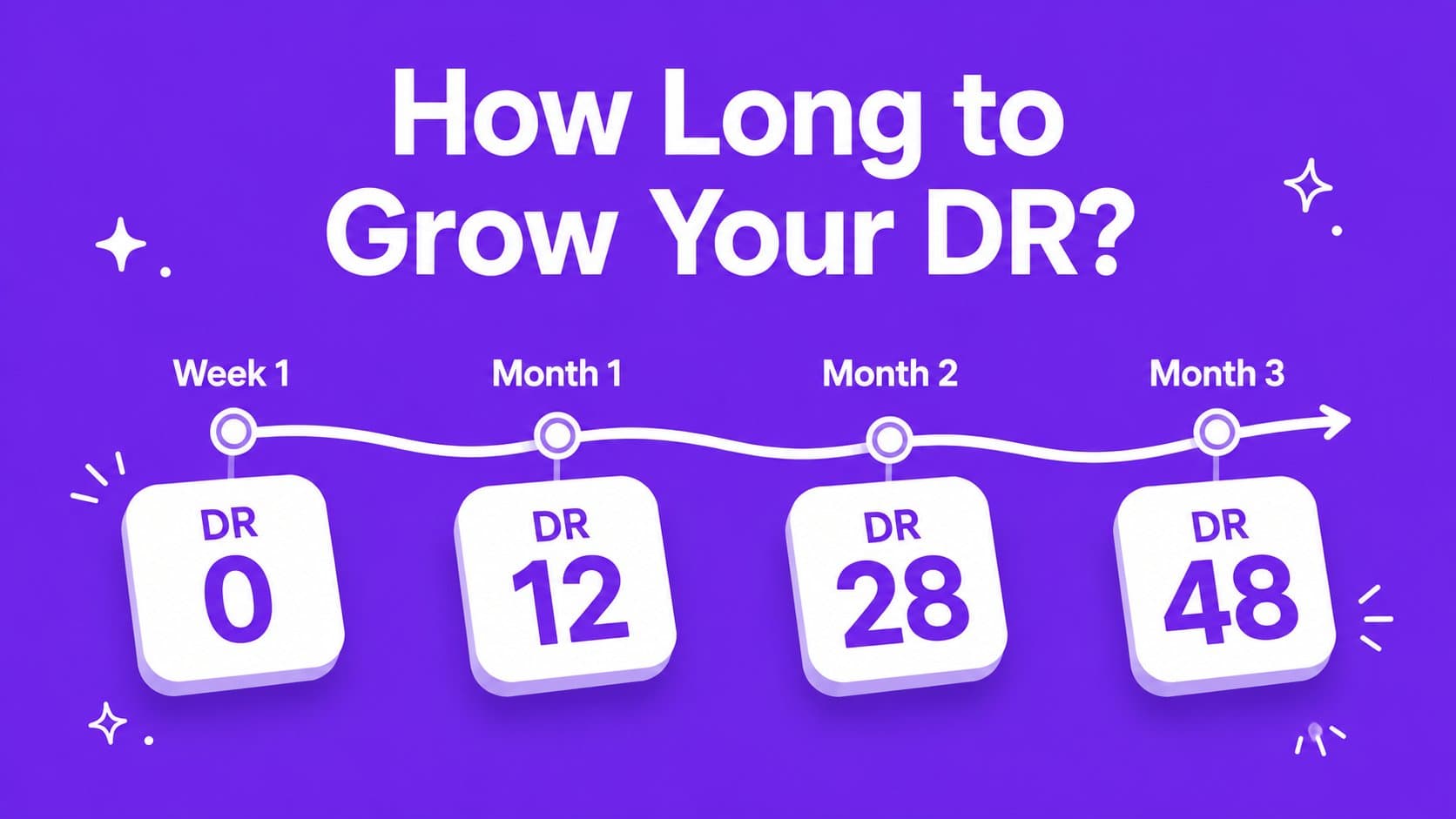
Three months of weekly posts gives you 12 to 13 posts. If half of them rank for something, that's 6 to 7 new organic traffic sources. The compound is real.
3. Internal linking is your highest-leverage habit
You already have backlinks. Now you need to redistribute that authority across every page you want to rank.
Every new post should:
- Link to 2 to 3 older posts on related topics (passes authority outward)
- Get linked from 2 to 3 older posts (receives authority inward)
- Link to a conversion page like /auto or /pro at least once
Most indie blogs skip this and wonder why their post #15 ranks worse than their post #3. The answer is usually that post #15 has zero internal links.
4. Watch what's already ranking and double down
Google Search Console tells you which queries you're getting impressions on but no clicks. That's free intelligence.
For every query with 10+ impressions and 0 clicks:
- Read the post that's ranking
- Rewrite its title to be more clickable
- Rewrite its meta description to answer the literal query
This is the highest ROI work you can do at DR 25+. We did exactly this on two of our own posts (the directories list and the DR explainer), with no content changes, just titles and descriptions.
What about more backlinks?
You still want them. The difference is: at DR 25, you stop hunting them and start earning them.
Stop submitting to mid-DR directories that won't move your number anymore. Instead, write content good enough that other sites quote it. A single link from a DR 70 industry blog is worth 30 directory submissions at this stage.
If you do want a bulk move from DR 25 to DR 30+, the same Auto Launch playbook still works, the directory list includes enough DR 60+ entries to nudge you up a tier.
The honest take on what changes at DR 25
The work gets less mechanical and more editorial. You spend less time submitting forms, more time writing. The wins are slower but larger.
Most indie builders quit before they get here. The ones who don't, compound for years.
Liked this article?