URL Rating vs Domain Rating: What's the Difference?
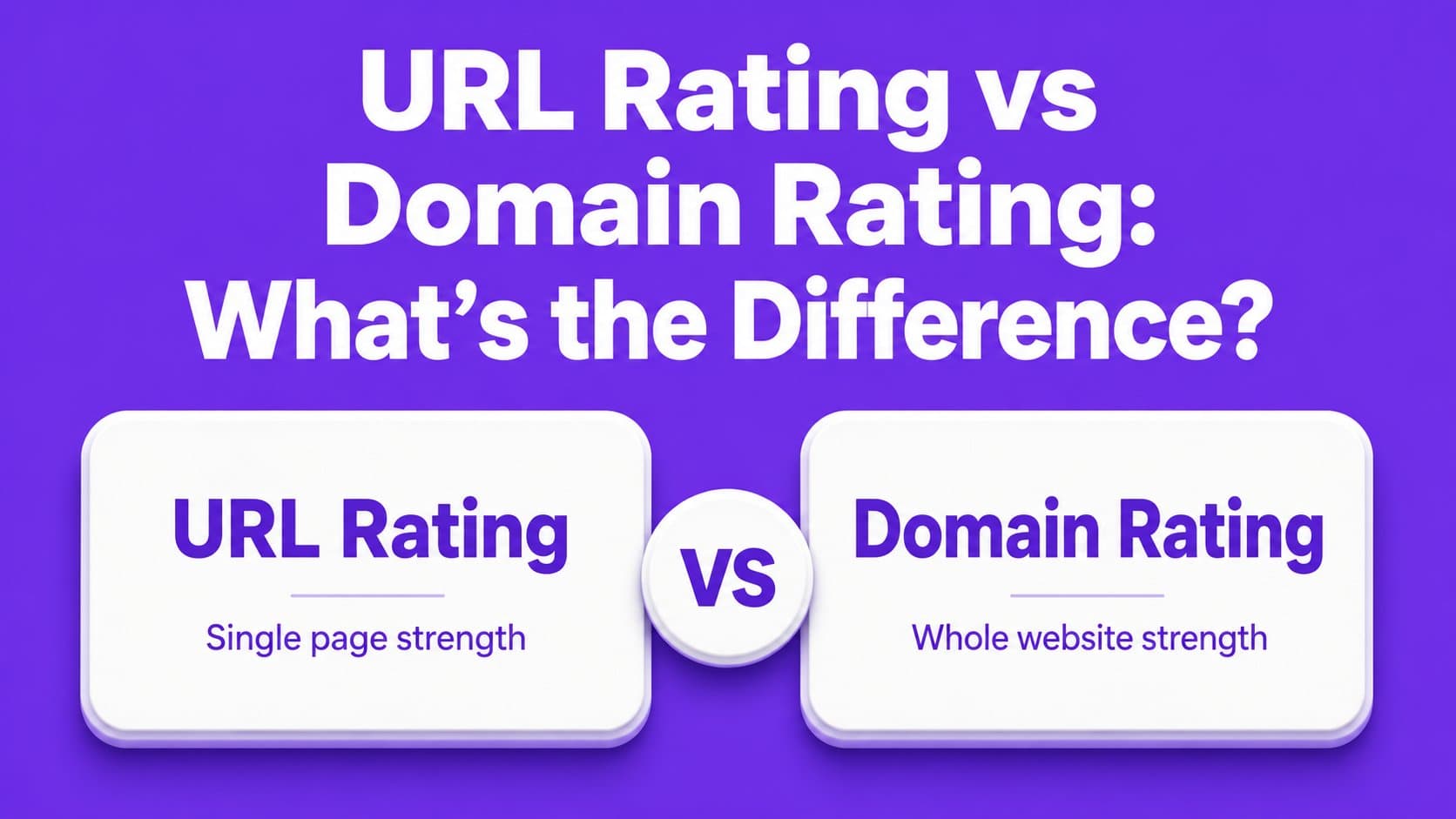
URL Rating measures one page's link strength, Domain Rating measures the whole site. Here's when each one matters and how to grow both as an indie builder.

URL Rating (UR) measures the backlink strength of a single page. Domain Rating (DR) measures the backlink strength of the whole domain. Both are Ahrefs metrics, scored 0 to 100, and both use a logarithmic scale where every step up is harder than the last.
For most indie builders, DR is the one that matters first. UR becomes relevant once you start chasing rankings for specific pages.
What is URL Rating?
URL Rating looks at the backlinks pointing at one specific URL. So /blog/your-killer-post has its own UR, separate from your homepage's UR, separate from your domain's DR.
A few things move URL Rating:
- Backlinks pointing directly at that URL, weighted by the DR of the linking site
- Internal links from other high-UR pages on your own site
- The depth of the page in your site structure (the homepage is shallow, deep pages start lower)
Two pages on the same domain can have very different URs. Your homepage might be UR 25, a blog post nobody links to might be UR 3, and a viral post with 50 external links might be UR 40.
What is Domain Rating?
Domain Rating is the rollup score for the entire domain. It looks at every page Ahrefs has indexed for your site, every external link pointing at any of them, and produces one number.
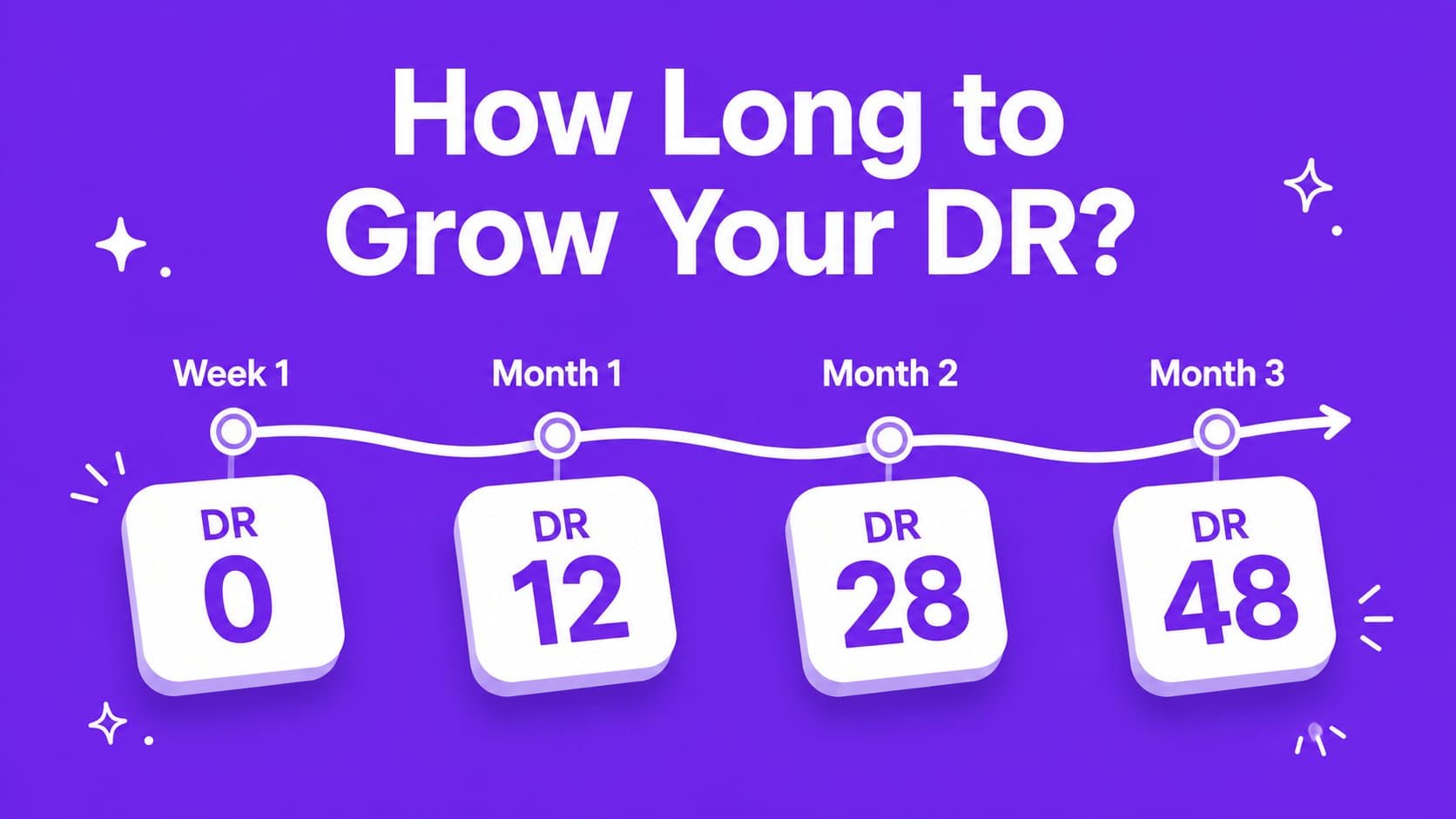
DR moves slowly. It's a lagging indicator that summarizes years of link building. We covered the mechanics in What Is Domain Rating?, so the short version: more referring domains, higher quality of those domains, all weighted logarithmically.
When URL Rating matters more than Domain Rating
A high DR doesn't automatically make every page rank. If you launch a new blog post on a DR 40 domain but the post itself has UR 0, Google still has to crawl, index, and trust that specific page before it ranks.
UR is what tells you whether a specific page can compete:
- Ranking a specific landing page for a buying keyword? UR of that page matters more than DR of your site.
- Trying to get a blog post to rank? Internal links from your higher-UR pages give the new post a head start.
- Comparing two competing pages on the same SERP? The page with higher UR usually wins, even if DR is close.
When Domain Rating matters more than URL Rating
DR matters when:
- You're a new site that hasn't earned page-specific links yet. Every page inherits a baseline trust from your DR.
- You're trying to rank multiple pages for related keywords. High DR lifts all your pages a little.
- You're getting evaluated by Google for new pages it hasn't crawled deeply. DR is the trust shortcut.
For a new indie product with one landing page, DR and UR are roughly the same conversation. Once you have a blog with 10+ posts, they diverge.
A practical example
You launch a SaaS at DR 5. You write a blog post targeting "best CRM for freelancers". The post has UR 0. Even with great content, Google won't rank you on page 1 because both DR and UR are too weak.
A year later, your DR is 28. You write the same post. UR is still 0 initially. But Google indexes it faster, gives it a higher starting position, and surfaces it for long-tail variants. Internal links from your higher-UR pages start nudging its UR up. Within weeks, it ranks for something.
The DR earned you the right to be considered. The UR earned the specific ranking.
How to grow both at the same time
The same lever moves both:
- Submit your domain to dofollow directories. Each one is a backlink to your homepage or a landing page, which adds to your domain's DR and that specific URL's UR.
- Internal-link new content from your strongest pages. A post linked from the homepage inherits some of the homepage's UR.
- Earn topic-cluster links. Get one post to rank, link your other posts to it, watch their UR climb too.
If you're at DR under 20 and trying to skip the slow grind, the fastest move is Auto Launch. It submits your site to 30, 50 or 100 vetted directories, which compounds onto your homepage's DR and UR simultaneously.
Liked this article?